Open source · Local-first
Requirements traceability you can run before the review.
Doorframe turns requirements exports, Jira work items, and test results into a traceability gap report, deterministically and on your own machine. Useful with or without AI.
Run it via CLI, npm, or Docker. All local.
Runs locally by default. Doorframe does not send imported project data to any external service.
Tour
From exports to review, in one local app
Import requirements, Jira work items, and JUnit results. Doorframe links them, flags the gaps, and shows you where to look.
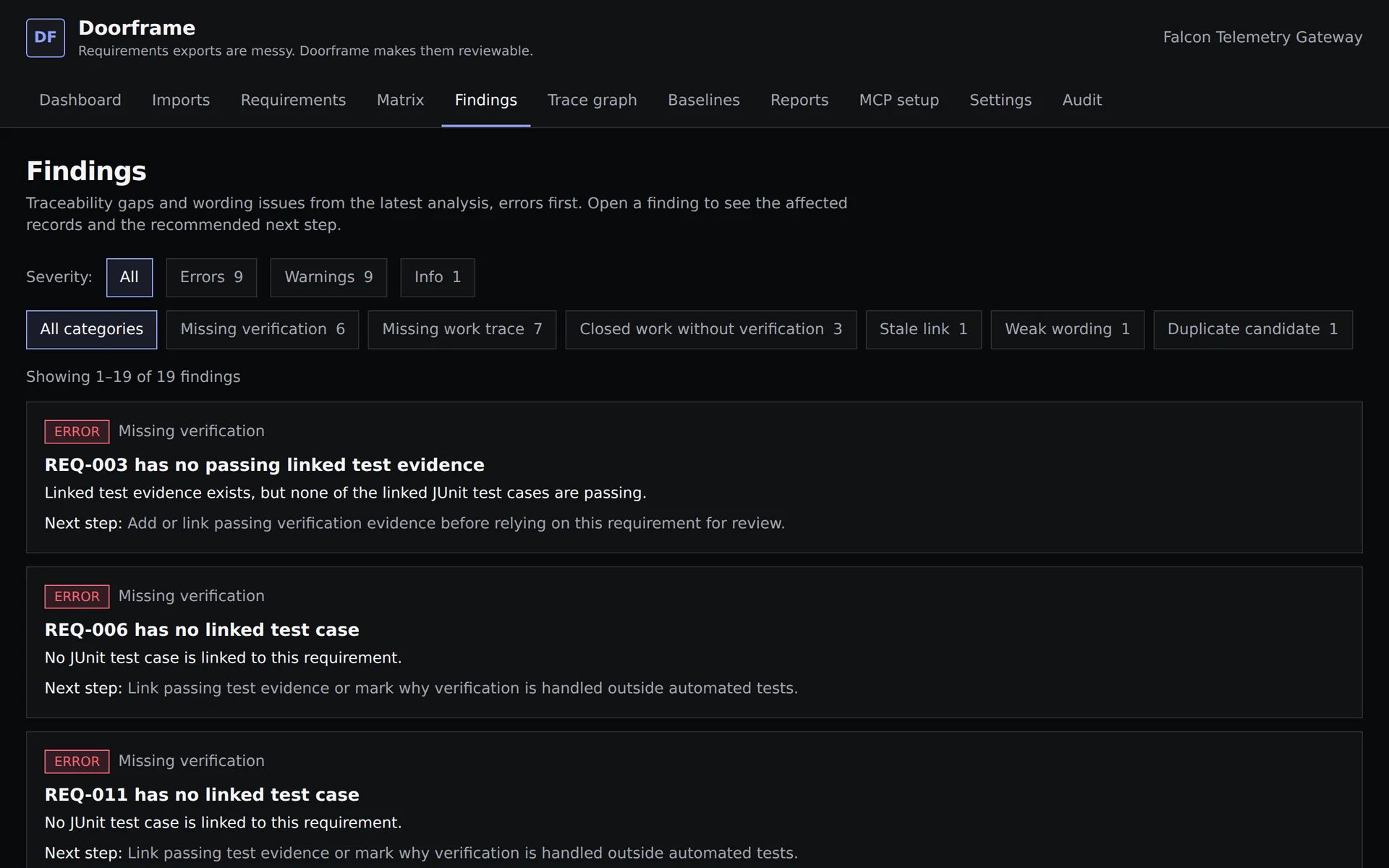
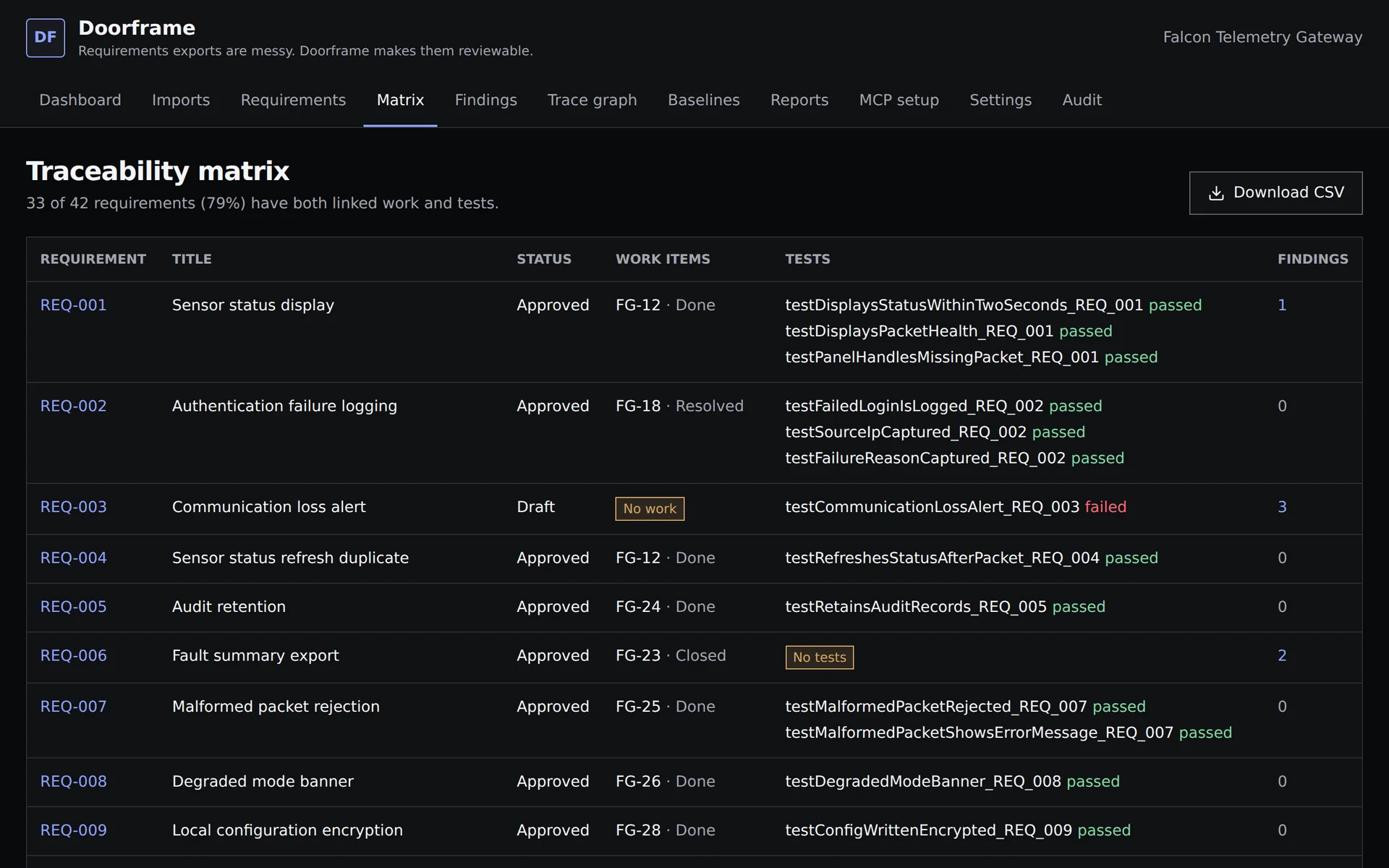
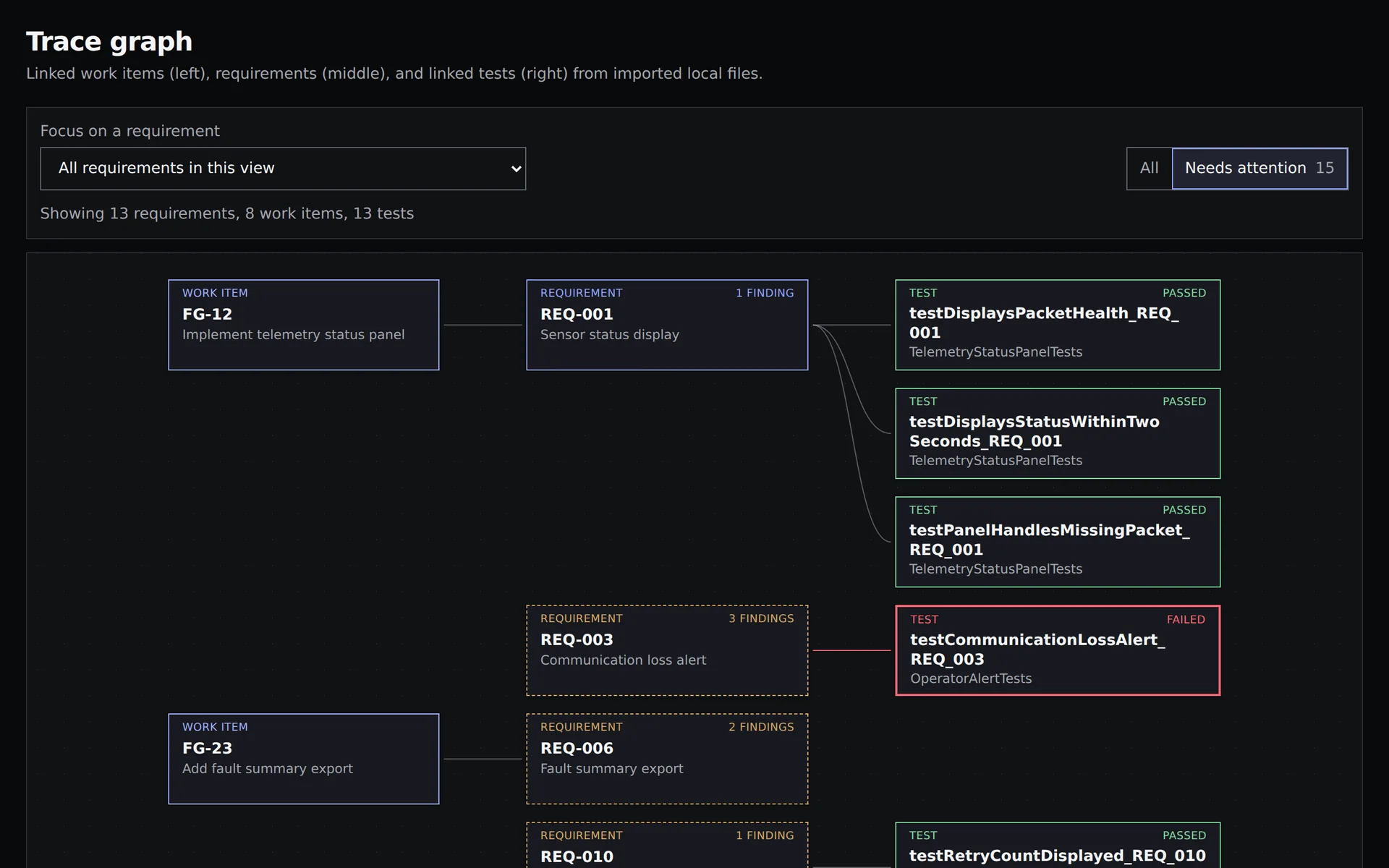
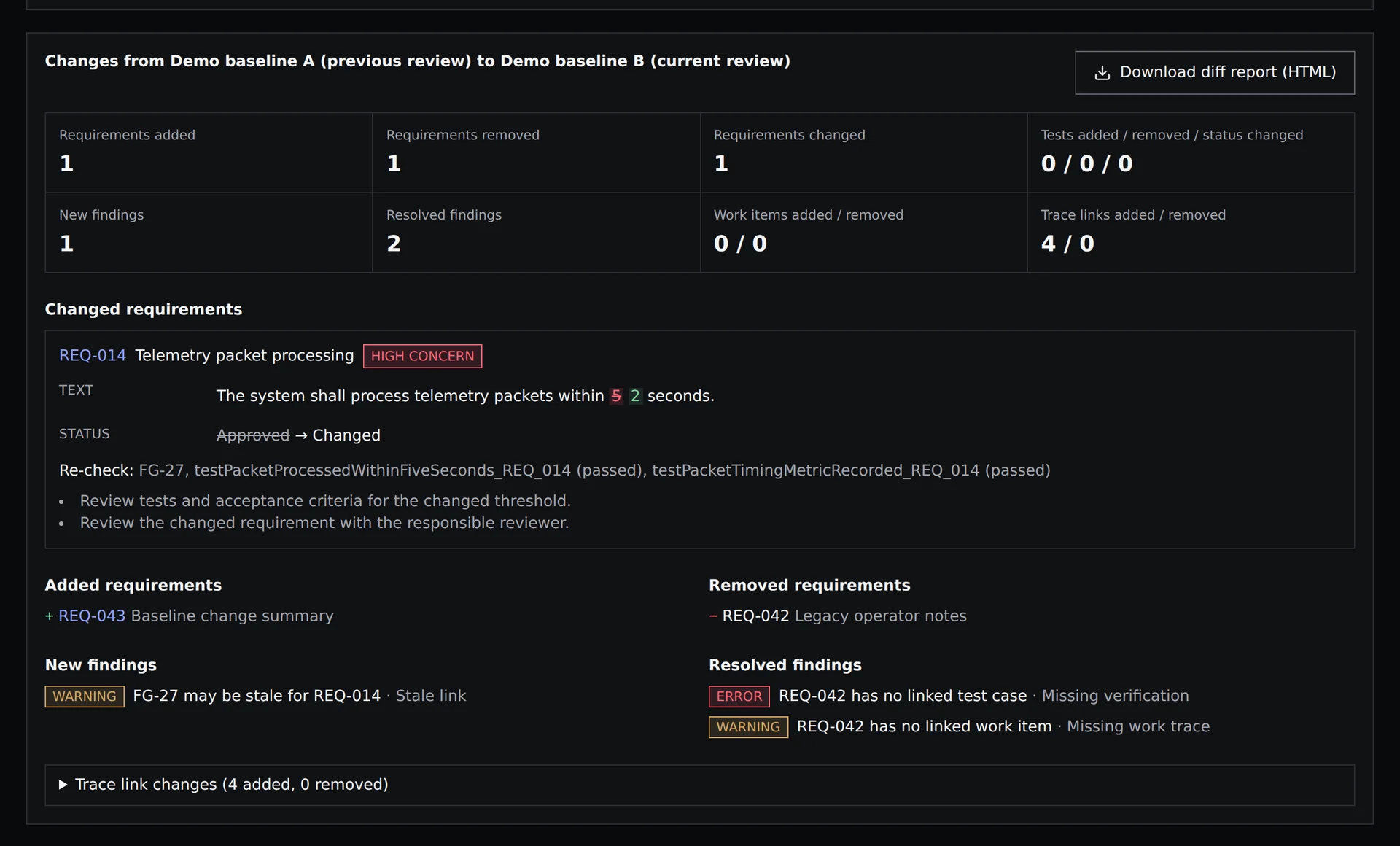
Screenshots show the fictional demo project. Load it yourself with npx doorframe demo.
What it is
A local review tool
- A local review tool for requirements exports.
- Available as a CLI, an npm package, or a Docker container. Run it whichever way fits your setup.
- A deterministic analyzer for traceability gaps, weak wording, duplicate candidates, failed tests, stale links, and closed work without passing verification.
- A way to compare two requirements baselines before a review.
- An optional read-only MCP server for local project databases.
- Works alongside your existing tools (DOORS, Jama, Polarion, Jira, and test management) as a review layer, not a replacement.
- Runs entirely on your own machine. No SaaS, no accounts, no uploads.
Built for isolated environments
Runs fully air-gapped
- Once installed, runs entirely on air-gapped and offline networks. No internet connection needed to use it.
- Makes zero network calls in operation and sends no telemetry. Nothing phones home, nothing to allowlist.
- Deterministic, repeatable output you can audit. The same inputs always produce the same gap report.
- Self-hosted on your own hardware. No SaaS, no accounts, no data egress.